What airlines have known for decades – and universities are just discovering
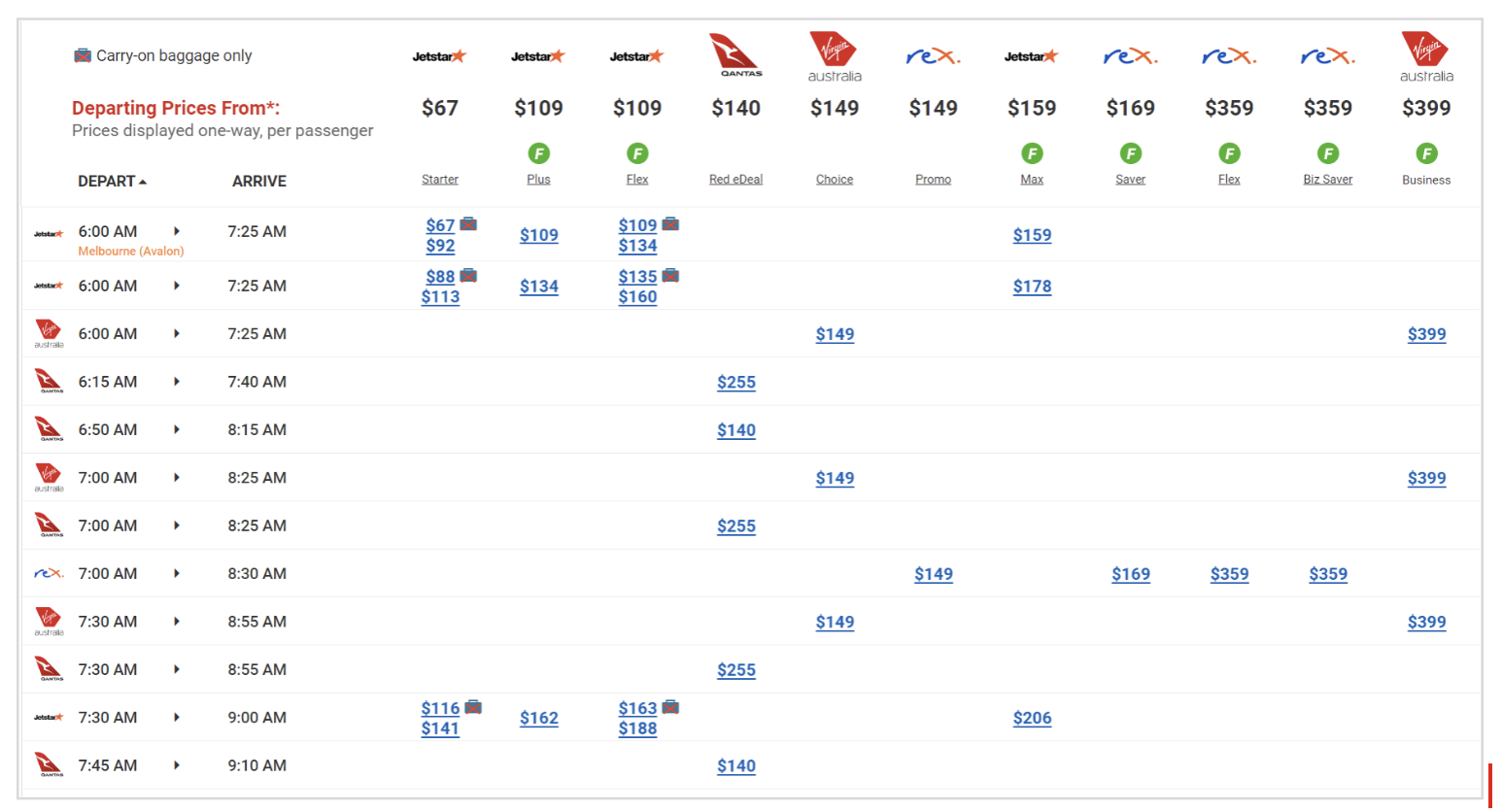
When an airline wants to know whether passengers would pay more for a flexible ticket than a slightly cheaper, non-refundable one, they don’t run a survey and hope for honest answers. They run an experiment.
They present real passengers with realistic choices – this fare, that fare, those conditions – and they watch what people choose.
Do it thousands of times, across enough people, and the pattern that emerges reveals something no survey ever could: not what people say they value, but what they’re genuinely willing to pay for.
That technique is called choice modelling.
The airline industry has been using it for decades. Universities are catching up – and the gap between those that do and those that don’t is beginning to show.
⚠️ The problem with asking students what they want
Here’s the issue with most prospective student research: it asks them what they want.
You’ll get perfectly reasonable answers. Rankings. Graduate outcomes. Location. Campus life. Teaching quality. Students aren’t lying; these things genuinely matter to them. But when it comes to the actual moment of choice – three offers on the table, one acceptance to make – the decision is driven by something more complex than any survey can capture.
Real decisions involve trade-offs. Would a student from Vietnam accept a lower-ranked university for a $10,000 scholarship? Would a student from China pay more in tuition if the institution had stronger name recognition back home? How much is a guaranteed internship actually worth – in dollar terms – compared with a better campus location?
Standard surveys can’t tell you. Choice modelling can.
📈 How choice modelling works
Choice modelling is a methodology drawn from microeconomics and consumer psychology. Participants are shown a series of realistic scenarios. For example, three hypothetical universities with different combinations of tuition fees, rankings, scholarships, campus locations and employability services. The participant has to choose one. The scenarios change. They choose again.
Run this across thousands of prospective students – crucially, prospective students, not current ones – and economists can extract precise, quantified answers to questions like:
- how sensitive are students from each source market to fee changes?
- what is the actual dollar value students attach to specific features of a university’s offer?
- what happens to demand if fees increase by 10% – and does that change by program or by market?
The key word is prospective. Current students can tell you how they feel about their experience. Prospective students tell you what drives their enrolment decisions. That distinction is fundamental to the reliability of any demand forecast.
✈️ Learning from the industries that got there first
Airlines use choice modelling to price seats dynamically, decide which routes to fly at what pricepoint, and simulate demand under conditions that haven’t happened yet. When a crisis hits – a pandemic, a geopolitical shift that closes airspace – they don’t revert to instinct. They adapt based on models built on a rigorous understanding of what customers value.
Transport planners use choice modelling to evaluate how commuters trade off journey time, cost and comfort. Hospitality groups use it to set room rates and package offers. Consumer goods companies use it to identify optimal pricepoints before a single product hits the shelf.
In each case, the principle is the same: simulate real decision-making conditions rather than asking people to describe abstract preferences. And in each case, the result is the same: better decisions, fewer expensive surprises.
Universities have operated without this rigour for a long time. In a period of strong international enrolment growth, they didn’t need it.
But that tide is shifting.
🎯 Getting to the core of what prospective students value
Some universities have already started to embrace choice modelling as a strategic planning tool. Over several years of applying choice modelling to international student decision-making, Edified has found results that consistently surprise the universities involved.
One Australian university found it could save millions annually just by restructuring its scholarship program. By moving from broad-based discounts to targeted, merit-based awards they were able to save on costs with no measurable reduction in demand.
This is just one of many examples of the incredibly valuable insight this rigorous, forward-looking research produces.
👉 Where to go from here
Our white paper sets out the findings and implications for university pricing and recruitment strategy.
If you’d like to explore how your institution could radically improve fee setting, get in touch for a confidential discussion.

Sharyn Martin
Senior Partner
Book a meeting